

Most dental problems announce themselves. A cavity causes sensitivity. A cracked tooth hurts when you bite. A gum infection swells and bleeds. But tooth resorption — one of the more serious conditions a dentist can find on an X-ray — often does none of these things.
It progresses quietly, dissolving the very structure of your tooth from within or from the outside, until enough damage has occurred that the tooth becomes difficult or impossible to save. By the time most patients feel anything, the resorption is already well advanced.
Understanding what it is, how it’s detected, and what can be done about it is the kind of knowledge that genuinely saves teeth.
What Is Tooth Resorption?
Tooth resorption is the process by which the body’s own cells begin breaking down and absorbing the hard tissue of a tooth — including the root, the dentin, or in some cases, the enamel. It is, in essence, your body treating part of a tooth as tissue to be removed rather than preserved.
In children, this is entirely normal — it’s how baby teeth make way for permanent ones. In adults, it is never normal and always requires investigation. Left untreated, dental resorption leads to structural failure of the tooth, which may ultimately result in tooth loss.
Types of Tooth Resorption: Internal vs External
Not all resorption is the same. The two main categories behave differently, present differently, and require different approaches to treatment.
Internal Tooth Resorption
Internal tooth resorption originates from inside the tooth — specifically from within the pulp chamber or root canal. The cells responsible for resorption (odontoclasts) are activated inside the tooth and begin dissolving the surrounding dentin outward.
Key characteristics:
- Often caused by trauma, infection, or prolonged pulp inflammation
- Typically painless in its early stages — sometimes for years
- Usually discovered on a routine dental X-ray as a rounded, dark shadow inside the tooth
- If left untreated, can perforate the outer wall of the tooth, making restoration far more complex
External Tooth Resorption
External tooth resorption begins at the outer surface of the tooth root, where the cementum meets the surrounding tissues. It is more common than internal resorption and has more varied causes.
Subtypes include:
- External cervical resorption: Begins at the neck of the tooth (near the gum line) and can be particularly aggressive
- External apical resorption: Involves shortening of the root tip — this is the most commonly seen form, particularly as resorption after braces or orthodontic treatment
- External inflammatory resorption: Driven by infection spreading from the root canal into surrounding bone and root surface
- Replacement resorption (ankylosis): The tooth root is gradually replaced by bone — often seen after dental trauma or reimplantation of an avulsed tooth
| 📌 Key distinction: Internal resorption is contained within the tooth and is generally more treatable in its early stages. External resorption involves structures outside the tooth and can be harder to detect and control once it has spread. |
Is Tooth Resorption Painful?
This is the question most patients ask — and the answer is one of the reasons tooth resorption is so clinically dangerous.
In the majority of cases, tooth resorption symptoms are entirely absent in the early and middle stages. The process is painless because it occurs in the dentin and root — areas that don’t generate pain signals until the pulp (nerve) is directly affected or infection sets in.
When symptoms do appear, they may include:
- Pink or reddish discolouration of the tooth crown (a sign of internal resorption visible through thinned enamel)
- Unexplained sensitivity to temperature or pressure
- A dull ache or throbbing that comes and goes
- Swelling near the gum line in cases of external cervical resorption
- Tooth mobility in advanced stages where root structure is severely compromised
By the time pain becomes a consistent symptom, the resorption has typically progressed significantly. This is precisely why routine dental check-ups and X-rays are the only reliable way to catch it early.
What Causes Tooth Resorption?
Tooth resorption causes vary depending on the type, but the most commonly identified triggers include:
- Dental trauma: A blow to the mouth, a fall, or any significant impact can initiate resorption months or even years after the original injury
- Orthodontic treatment: Some degree of orthodontic root resorption is relatively common with prolonged or heavy force application — generally minor, but occasionally significant
- Chronic pulp infection: Untreated decay reaching the pulp creates the inflammatory environment that drives internal resorption
- Tooth bleaching: Particularly internal (walking) bleaching of non-vital teeth has been linked to external cervical resorption
- Impacted or misaligned teeth: Pressure from impacted wisdom teeth or ectopic canines against adjacent roots can cause localised resorption
- Systemic conditions: Hyperparathyroidism, Paget’s disease, and certain medications affecting bone metabolism have been associated with resorption
- Idiopathic resorption: In some cases, no clear cause is identified — the condition simply presents on imaging without an obvious trigger
How Is Tooth Resorption Diagnosed?
Because dental resorption diagnosis rarely relies on patient-reported symptoms, imaging is the cornerstone of detection:
- Periapical X-rays: Standard dental X-rays can reveal resorption as dark areas within or around the root — though they only provide a two-dimensional view
- CBCT (Cone Beam CT) scanning: Three-dimensional imaging provides a far more detailed picture of the extent and location of resorption, and is increasingly the gold standard for planning treatment
- Clinical examination: Pink discolouration, unusual probing depths at the gum margin, or unexplained tooth mobility may prompt further investigation
This is one of the strongest arguments for not skipping your annual dental X-rays. A tooth resorption finding at an early stage is a treatable problem. Found late, it may mean extraction.
Root Resorption Treatment: Can It Be Stopped?
The answer to can tooth resorption be stopped depends on the type, the stage, and the extent of tissue already lost. Here’s how treatment typically unfolds:
| Type | Treatment Options | Prognosis |
|---|---|---|
| Internal Resorption (early) | Root canal therapy to remove pulp and halt process | Excellent if caught early |
| Internal Resorption (perforated) | Root canal + MTA repair of perforation | Good to guarded |
| External Cervical Resorption | Surgical exposure + restoration of defect; root canal if pulp involved | Depends on depth and extent |
| External Apical (ortho-related) | Monitor; adjust orthodontic forces; treatment pause if severe | Usually stable once forces removed |
| Advanced / Extensive | Extraction + implant or bridge replacement | Tooth loss; focus on replacement |
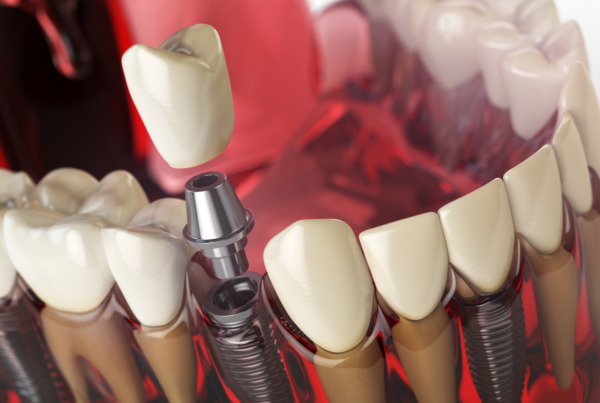
Where the tooth cannot be saved, dental implants offer the most stable, natural-feeling long-term replacement — preserving bone and restoring full function. In some cases, dental crowns or bridges may be the appropriate restoration once resorption is treated and the tooth structure is stabilised.
When Should You See a Dentist?
The challenge with tooth resorption is that waiting for symptoms to appear means waiting too long. See your dentist promptly if:
- You notice any pinkish or reddish tinge developing on a tooth
- A tooth becomes unexpectedly sensitive without an obvious cause
- You’ve had a dental injury — even if the tooth appears fine immediately after
- You are mid-way through or recently completed orthodontic treatment — a post-treatment X-ray is advisable
- It has been more than a year since your last set of dental X-rays
Equally important: if you’ve been diagnosed with tooth pain or sensitivity that hasn’t resolved with standard treatment, ask your dentist specifically about resorption as a possible explanation. It is, unfortunately, sometimes overlooked without targeted imaging.
For patients who have had root canal therapy in the past, periodic monitoring X-rays are particularly important, as treated teeth can still develop external resorption in some cases.
The Bottom Line
| Tooth resorption is almost always silent in its early stages — which makes it one of the most important reasons to attend regular dental appointments even when nothing feels wrong. When caught early, root resorption treatment can halt the process and preserve the tooth. When caught late, options narrow significantly.
Don’t let a silent condition become a visible problem. |
Concerned about tooth resorption, or due for a check-up? Book an appointment at American Dental Practices in Mumbai or Bangalore. Our team uses advanced imaging and a thorough clinical approach to catch conditions like resorption long before they threaten your smile.