
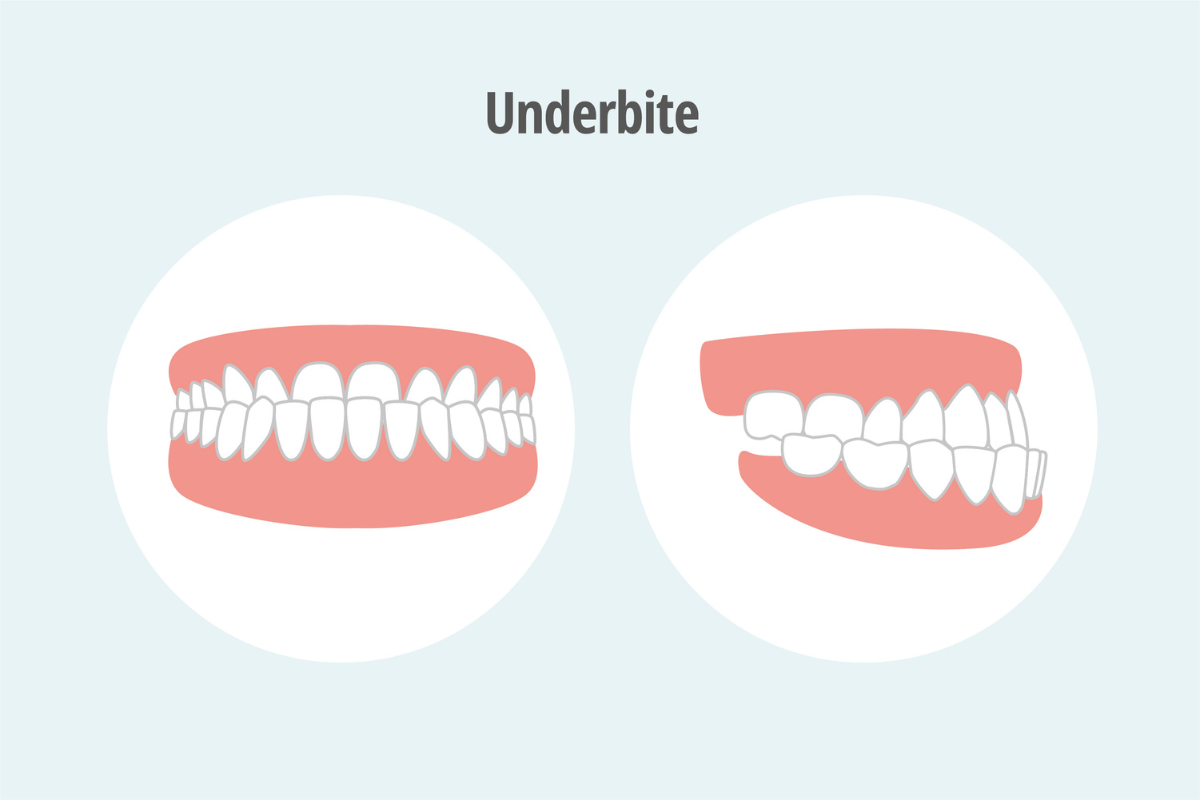
An underbite is one of those conditions that most people are quietly aware of long before they seek treatment. The lower teeth sit in front of the upper teeth when the mouth closes — sometimes subtly, sometimes dramatically — affecting how the face looks, how food is chewed, and in many cases, how confidently a person smiles.
Searches for how to fix an underbite naturally are common — and understandably so. But the honest clinical answer is more nuanced than most online sources admit: whether natural correction is possible depends almost entirely on the cause and severity of the underbite, and on the patient’s age. Getting this assessment right from the start saves time, money, and disappointment.
This guide covers every treatment option available in India, what each costs, and exactly when natural or non-surgical approaches are realistic versus when they are not.
What Is an Underbite and What Causes It?
An underbite — clinically called Class III malocclusion — occurs when the lower jaw (mandible) protrudes forward relative to the upper jaw, causing the lower front teeth to sit ahead of the upper front teeth when the mouth is closed. It ranges from a mild tooth-level discrepancy to a significant skeletal jaw imbalance.
There are two distinct types, and the treatment approach differs completely between them:
- Dental underbite: The jaw bones are normally positioned but individual teeth are angled incorrectly, creating the appearance of an underbite. This is more common and significantly more treatable with orthodontic methods alone
- Skeletal underbite: The lower jaw bone itself is larger or longer than the upper jaw — a structural difference that orthodontics alone cannot fully correct in adults
Common causes include:
- Genetics: Jaw size and proportion are largely hereditary — a family history of underbite is the most common single factor
- Childhood habits: Prolonged thumb sucking, extended pacifier use, and mouth breathing during jaw development years can all contribute to jaw and bite misalignment — something children’s dental check-ups are designed to catch early
- Tongue posture: Habitual low tongue position during childhood can push the lower jaw forward during the critical growth period
- Injury: Facial trauma during development can alter jaw growth patterns
Can You Fix an Underbite Naturally?
The direct answer: in children, yes — partially. In adults with a skeletal underbite, no.
The concept of fixing an underbite naturally applies most meaningfully in two contexts:
In Young Children (Under 10)
The jaw is still growing and highly responsive to guidance. Early intervention during this window — called interceptive orthodontics — can redirect jaw growth before the skeletal pattern becomes fixed. This is the closest thing to ‘natural’ correction that has clinical backing:
- Chin cup appliance: A removable device that applies gentle backward pressure to the lower jaw during growth, redirecting its development
- Reverse pull facemask: Encourages forward growth of the upper jaw to match the lower — most effective between ages 7–10
- Habit elimination: Stopping thumb sucking and correcting tongue posture early can prevent a dental underbite from progressing to a skeletal one
In Teenagers
The jaw is still partially responsive to growth modification during adolescence. Orthodontic treatment combined with growth guidance appliances can achieve significant correction without surgery in many cases — particularly for dental or mild skeletal underbites. This is the most important window for non-surgical treatment.
In Adults
Jaw growth is complete by the late teens. In adults, how to fix an underbite naturally — without any professional intervention — is not clinically realistic for anything beyond the mildest dental underbite. Jaw exercises alone cannot move teeth or reposition jaw bones. What they can do is reduce the associated jaw muscle tension and TMJ symptoms that often accompany an underbite — covered in detail in our jaw exercises and TMJ guide.
| 📌 Key takeaway: The earlier an underbite is identified and treated, the greater the range of non-surgical options available — and the lower the overall cost. A children’s dental evaluation before age 7 is the single most effective ‘natural’ underbite intervention available. |
Underbite Treatment Options in India
1. Orthodontic Braces (Dental Underbite / Mild Cases)
For dental underbites — where the problem lies in tooth angulation rather than jaw size — orthodontic treatment using fixed braces or aligners can achieve complete correction. Braces move individual teeth to create a proper bite relationship without touching the jaw bones.
- Best for: Dental underbites in teens and adults; mild skeletal underbites in growing patients
- Duration: 18 months to 3 years depending on severity
- Cost in India: ₹40,000 – ₹1,20,000 for metal braces; ₹80,000 – ₹2,50,000 for ceramic braces
2. Invisible Aligners (Clear Aligners)
For mild to moderate dental underbites, invisible aligners offer the same tooth movement as braces with significantly better aesthetics and comfort. They are removable, nearly invisible, and allow normal eating and oral hygiene.
- Best for: Dental underbites in adults who want a discreet treatment option
- Duration: 12–24 months for most cases
- Cost in India: ₹1,50,000 – ₹3,50,000 depending on brand and case complexity
- ADP offers: Invisible braces consultation in both Mumbai and Bangalore
3. Orthognathic Surgery (Skeletal Underbite in Adults)
For adults with a true skeletal underbite — where the jaw bone itself is disproportionate — orthognathic (jaw) surgery combined with pre- and post-surgical orthodontics is the only treatment that fully corrects the underlying cause. The surgery repositions the upper jaw, lower jaw, or both to achieve proper alignment.
- Best for: Adults with moderate to severe skeletal Class III malocclusion
- Duration: 1–2 years total (including orthodontic preparation and post-surgical settling)
- Cost in India: ₹2,50,000 – ₹6,00,000+ including orthodontics (significantly lower than equivalent treatment in the UK, US, or Australia)
- India advantage: Many international patients choose dental treatment in India specifically for orthognathic surgery — comparable quality at 30–50% of Western costs
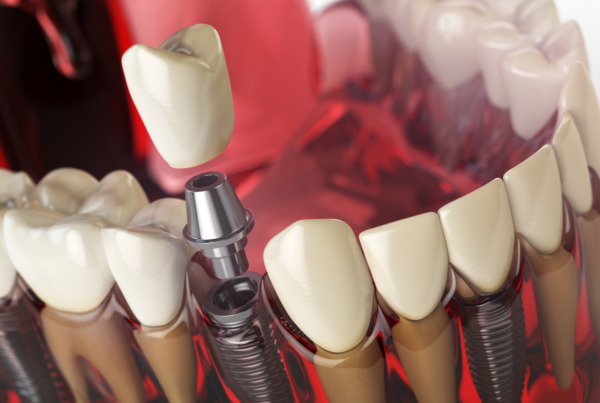
4. Dental Camouflage (Veneers / Crowns for Mild Cases)
For very mild dental underbites where the patient is primarily concerned with aesthetics rather than function, veneers or crowns on the upper front teeth can create the visual appearance of better alignment. This does not correct the bite — it camouflages it cosmetically.
- Best for: Patients with minimal functional impact who want cosmetic improvement without orthodontic treatment
- Cost: ₹8,000 – ₹25,000 per tooth depending on material
- Important note: Not suitable for moderate or severe underbites — masking a functional bite problem cosmetically while leaving it untreated is not a long-term solution
Underbite Treatment Cost in India: At a Glance
| Treatment | Best For | Duration | Cost (India) |
|---|---|---|---|
| Early interceptive (child) | Under 10, growing jaw | 6–18 months | ₹20,000 – ₹60,000 |
| Metal braces | Dental / mild skeletal | 18–36 months | ₹40,000 – ₹1,20,000 |
| Ceramic braces | Teens & adults | 18–36 months | ₹80,000 – ₹2,50,000 |
| Invisible aligners | Adults, dental underbite | 12–24 months | ₹1,50,000 – ₹3,50,000 |
| Orthognathic surgery | Adults, skeletal underbite | 1–2 years | ₹2,50,000 – ₹6,00,000+ |
| Veneers / camouflage | Cosmetic only, mild cases | 2–4 weeks | ₹8,000 – ₹25,000/tooth |
Why India Is a Smart Choice for Underbite Treatment
India has emerged as one of the leading destinations for complex orthodontic and surgical dental treatment — not because standards are lower, but because costs are structured very differently. A full orthognathic surgery case that costs ₹15–25 lakh in the UK or USA can be completed to the same international standard in Mumbai or Bangalore for ₹2.5–6 lakh.
For international patients and NRIs, dental tourism at ADP includes coordination of the full treatment journey — from initial assessment to post-surgical orthodontics — across our Mumbai and Bangalore clinics.
Underbite treatment — particularly at the surgical level — often requires a full mouth rehabilitation approach to restore both function and aesthetics once the jaw position is corrected. This is where our multidisciplinary team — combining orthodontics, oral surgery, and cosmetic dentistry — delivers outcomes that a single-speciality practice cannot.
What Happens If an Underbite Is Left Untreated?
Many patients with mild underbites assume treatment is purely cosmetic. The functional consequences of an untreated underbite tell a different story:
- TMJ problems: Abnormal bite loading accelerates joint deterioration and is a leading cause of the jaw pain and clicking described in our jaw exercises and TMJ guide
- Uneven tooth wear: Lower teeth make contact with uppers in the wrong position, wearing down enamel asymmetrically — eventually requiring crowns or full mouth restoration
- Gum recession: Abnormal forces on the gum margin can trigger recession and gum disease in the affected areas
- Chewing inefficiency: Food is not broken down properly, affecting digestion and nutrition
- Speech issues: Significant underbites can affect pronunciation of certain sounds
- Progressive worsening: In adults, untreated underbites tend to worsen gradually as tooth wear changes the bite relationship further
Choosing the Right Treatment: Questions to Ask
📋 Before committing to any underbite treatment, ask:
A proper clinical assessment — including X-rays, dental impressions or 3D scans, and a face-to-face consultation — is the only way to get accurate, personalised answers to these questions. |
The Bottom Line
| The question of how to fix an underbite naturally has a clear clinical answer: in children, early intervention can redirect jaw growth with minimal invasiveness. In adults, the treatment that works depends on whether the underbite is dental or skeletal — and professional assessment is the only way to know which one you have. India offers world-class underbite treatment at a fraction of international costs, making it one of the most accessible treatment destinations globally.
The cost of not treating an underbite — in tooth wear, jaw pain, and eventual reconstruction — consistently exceeds the cost of treating it early. |
Ready to find out which underbite treatment is right for you? Book a consultation at American Dental Practices in Mumbai or Bangalore. Our team — combining orthodontics, invisible aligners, and orofacial expertise — will assess your bite, classify your underbite accurately, and give you a clear treatment plan with honest costs before any commitment is made.