
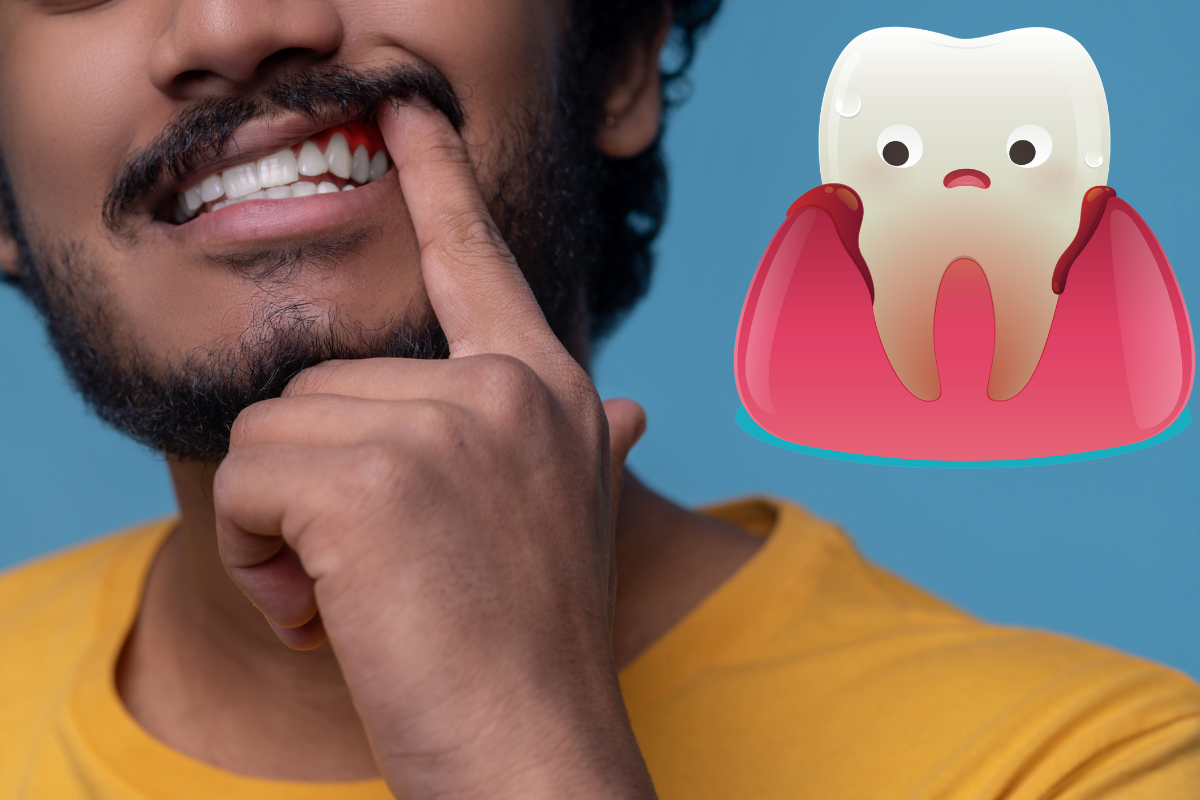
Most people who have gingivitis don’t know they have it. Not because it’s difficult to detect — it isn’t. But because its earliest signs are easy to dismiss, normalise, or explain away. Gums that bleed a little when you brush. A vague bad taste in the morning. Gums that look slightly puffier than they used to.
The danger is not the gingivitis itself. Gingivitis is reversible — completely, with professional cleaning and better home care. The danger is what happens when it’s ignored. Untreated gingivitis progresses to periodontitis — irreversible bone loss around the teeth that is the leading cause of adult tooth loss in India and globally. The transition from one to the other is silent, painless, and faster than most patients expect.
At American Dental Practices, we see this pattern every week: patients who come in with what they assume is ‘normal’ gum sensitivity, only to discover on examination and X-ray that bone loss has already begun. This guide is designed to help you recognise the signs before that happens.
What Is Gingivitis? The Basics Worth Understanding
Gingivitis is inflammation of the gingiva — the gum tissue that surrounds and seals the base of each tooth. It is caused by the accumulation of plaque: a sticky bacterial biofilm that forms continuously on tooth surfaces. When plaque is not removed consistently through brushing and interdental cleaning, the bacteria within it irritate the gum tissue, triggering an inflammatory response.
This inflammation — gingivitis — is the body’s attempt to fight the bacterial infection. The gums become engorged with blood (making them bleed easily), swell, and change colour. The critical distinction: at this stage, the underlying bone and periodontal ligament are not yet affected. The damage is confined to the soft tissue, and it is fully reversible.
Once gingivitis progresses to periodontitis, the infection spreads below the gum line into the bone-supporting structures. Bone lost to periodontitis does not regenerate without surgery. This is the threshold that makes early recognition of gingivitis symptoms so clinically important.
7 Early Signs of Gingivitis Most People Dismiss
1. Bleeding Gums When Brushing or Flossing
This is the most common early sign of gingivitis — and the one most frequently normalised. Patients assume their gums bleed because they’re brushing too hard, or because they haven’t flossed in a while and the gums are ‘sensitive.’ Both of these can contribute, but the underlying cause of easy gum bleeding is almost always inflammation from plaque accumulation.
Healthy gums do not bleed during routine brushing or flossing regardless of pressure. If yours do, consider it a signal, not a coincidence. Blood in the saliva after brushing is one of the earliest and most reliable gingivitis warning signs — covered in detail at American Dental Practices’ blog.
2. Gums That Look Redder or Darker Than Usual
Healthy gum tissue is coral-pink and firm. In gingivitis, the gums become red, dusky red, or even slightly purplish as blood flow increases due to inflammation. The change is often gradual — which is precisely why patients don’t notice it until a dentist points it out during examination.
- Where to check: Look at the gum margin — the edge where the gum meets the tooth. In healthy gums this is tight and pale pink. In gingivitis it is swollen, rounded, and darker
3. Swollen or Puffy Gum Margins
Inflamed gums lose their natural tight, scalloped contour and become swollen and rounded at the margins. This puffiness changes the way the gum fits around the tooth — creating a slightly larger space between gum and tooth that traps even more plaque, accelerating the cycle.
- Common patient description: ‘My gums look bigger than they used to’ or ‘my teeth look shorter’ — both are descriptions of swollen gum margins obscuring more of the tooth surface
4. Persistent Bad Breath That Brushing Doesn’t Fix
The bacteria responsible for gingivitis produce volatile sulphur compounds — the same compounds behind the persistent onion or sulphur taste that patients describe even after brushing. When gum pockets deepen even slightly from inflammation, they become home to anaerobic bacteria whose metabolic output produces chronic bad breath that mouthwash only temporarily masks.
Our detailed natural mouthwash guide for bad breath covers the most effective rinse options — but it also makes clear that rinsing alone cannot address the bacterial source inside inflamed gum tissue.
5. Gums That Feel Tender or Sensitive to Touch
Inflamed gum tissue becomes hypersensitive. Patients notice discomfort when eating certain foods, when the toothbrush contacts the gum margin, or when the gum is pressed. This tenderness is often mild enough to be attributed to ‘sensitivity’ rather than recognised as an infection sign.
- Distinguish from tooth sensitivity: Gum tenderness is on the tissue itself, not the tooth. Tooth sensitivity is triggered by temperature or sweet foods, not pressure on the gum. Tooth sensitivity has its own causes — but both can coexist with gingivitis
6. A Change in Gum Colour Around a Specific Tooth
Gingivitis can be generalised (affecting all gum tissue) or localised (affecting the gum around one or two specific teeth). Localised gingivitis often goes unnoticed longest because the change is subtle and patients don’t compare individual teeth closely.
If you notice gum tissue changing colour or appearance around one specific tooth — whether red, pale, or swollen — this warrants a dental examination even if no pain is present.
7. Gums That Bleed Spontaneously — Without Any Contact
Spontaneous bleeding — blood appearing on the pillow, noticing a blood taste without brushing, or gums that bleed during meals — indicates that inflammation has progressed beyond the mildest stage. This is no longer gingivitis whispering; it is gingivitis speaking clearly. At American Dental Practices, we consider spontaneous gum bleeding an indication for same-week professional evaluation.
The Gingivitis Symptom You Won’t Feel: No Pain
| ⚠️ The most important fact about gingivitis: It is almost entirely painless. Patients wait for pain as their signal to see a dentist — but gingivitis does not produce significant pain in most cases. Periodontitis (advanced gum disease with bone loss) is also largely painless until it is severe. Pain is a late signal in gum disease, not an early one. The early signals are visual and sensory — bleeding, colour change, swelling, and bad taste. |
This is the clinical reality that underlies the title of this article. The signs of gingivitis are not subtle — they are simply ignored, rationalised, or not known to be significant. By the time pain appears consistently, bone loss has usually already occurred.
What Causes Gingivitis? Risk Factors Worth Knowing
While inadequate plaque removal is the primary driver, several factors increase susceptibility to gingivitis:
- Infrequent or inadequate interdental cleaning: The spaces between teeth account for approximately 40% of all tooth surfaces — areas brushing cannot reach. This is exactly why flossing or water flossing daily is the single most important preventive step beyond brushing
- Smoking and tobacco use: Nicotine restricts blood flow to the gums — masking the bleeding response that would normally signal inflammation. Smokers have gingivitis and periodontitis at higher rates than non-smokers, but with fewer visible signs — making it easier to miss
- Hormonal changes: Pregnancy, puberty, menopause, and hormonal contraceptives increase gum sensitivity to plaque. Pregnancy gingivitis is extremely common — another reason regular dental visits during pregnancy matter
- Certain medications: Antiepileptics, calcium channel blockers, and some immunosuppressants cause gum overgrowth (gingival hyperplasia) that traps plaque and accelerates gingivitis
- Misaligned teeth: Crooked or overlapping teeth create surfaces that are nearly impossible to clean effectively — a direct mechanical driver of localised gingivitis that orthodontic treatment addresses
- Dry mouth: Saliva is the mouth’s natural antibacterial. Reduced saliva flow — from medication, mouth breathing, or dehydration — allows plaque to accumulate faster
- Children: Gingivitis is common in children, particularly around erupting teeth and during hormonal changes at puberty. Regular children’s dental check-ups are the primary preventive tool
Gingivitis vs Periodontitis: Know the Difference
| Feature | Gingivitis | Periodontitis |
|---|---|---|
| Tissue affected | Gum tissue only | Gum + bone + ligament |
| Reversible? | Yes — fully reversible | No — bone loss is permanent |
| Pain | Usually none | Usually none until severe |
| Bleeding | Yes — on contact | Yes — often spontaneous |
| Gum recession | Minimal or none | Progressive recession |
| Pocket depth | Healthy (1–3mm) | Deepened (4mm+) |
| Bone loss on X-ray | None | Visible and measurable |
| Treatment | Professional clean + home care | Scaling, surgery, laser, ongoing |
| Tooth loss risk | None if treated | Significant if untreated |
Is Gingivitis Reversible? Yes — But Only at This Stage
This is the most clinically important point in this entire guide. Gingivitis is the only stage of gum disease that is completely reversible. Once it progresses to periodontitis and bone loss begins, treatment can halt the progression but cannot restore bone that has already been destroyed without surgery.
What reversal of gingivitis actually requires:
- Professional scaling: Professional cleaning at American Dental Practices removes the hardened tartar (calculus) below the gum line that home brushing cannot touch — eliminating the primary bacterial source
- Consistent flossing: Daily interdental cleaning removes the plaque between teeth that causes 80% of gum margin inflammation — this is not optional. Our flossing vs water flosser guide helps patients choose the right tool and technique
- Correct brushing technique: Angled at 45° to the gum line, gentle circular strokes — full guidance in our oral hygiene guide
- Follow-up appointments: Gingivitis does not resolve after a single clean. A 3–6 month review appointment confirms the inflammation has resolved and catches any areas still showing signs
- Addressing risk factors: Quitting tobacco, managing medications, correcting misalignment — removing the drivers that made you susceptible in the first place
Gingivitis Home Remedies: What Helps and What Doesn’t
Several gingivitis home remedies have genuine clinical support as adjuncts to professional care:
- Warm salt water rinse: Reduces gum inflammation and bacterial load at the surface — rinse for 60 seconds, 2–3 times daily
- Oil pulling: Evidence supports a reduction in plaque and gingivitis scores with daily oil pulling — covered in our natural mouthwash guide
- Neem-based rinse: Neem’s antibacterial and anti-inflammatory properties are well-documented — effective as a supplementary rinse alongside professional care
- Turmeric gel: Applied directly to the gum margin, turmeric (curcumin) has demonstrated anti-inflammatory effects comparable to chlorhexidine gel in some studies
| ⚠️ What home remedies cannot do: Remove tartar below the gum line. Reverse bone loss. Replace professional scaling. Home remedies are adjuncts — valuable ones — but they treat the surface, not the source. American Dental Practices recommends combining the best evidence-based home care with regular professional cleaning for optimal gum health. |
When to See a Dentist for Gingivitis
📋 Book an appointment at American Dental Practices if:
The most important thing to understand: gingivitis does not declare itself through pain. At American Dental Practices, the patients we see with the most advanced gum disease are often the ones who felt no discomfort until very late. Don’t wait for pain. Act on the early signs. |
The Bottom Line
| Gingivitis is both the most common and most treatable form of gum disease — and the one most consistently ignored until it becomes something much more serious. Bleeding gums, red and swollen gum margins, bad breath, and tender gum tissue are not normal. They are signs that your gums are infected and asking for help.
Caught at the gingivitis stage, the treatment is straightforward, affordable, and completely reversible. Caught at the periodontitis stage, it involves surgery, bone grafts, and sometimes tooth loss. The difference between the two is simply timing. |
Think your gums might be trying to tell you something? Book a consultation at American Dental Practices in Mumbai or Bangalore. Our gum treatment specialists will assess your gum health with a full clinical examination, identify exactly what stage you’re at, and give you a clear, honest treatment plan — whether that’s a professional clean, laser gum therapy, or a simple improvement to your home care routine.