
Be honest: how often do you actually floss? If the answer involves the phrase ‘before my dental appointment,’ you’re in good company — but also in a category that dentists see the consequences of every single day.
The debate around flossing vs not flossing resurfaced in 2016 when some media reports suggested flossing had ‘weak evidence’ behind it. What those headlines missed was the clinical reality that dentists see daily: patients who don’t clean between their teeth consistently develop far more interproximal decay, deeper gum pockets, and faster bone loss than those who do. The science on this is not actually in question.
What is a legitimate debate is whether traditional string floss or a water flosser does it better — and what dentists actually say when you ask them off the record.
Why Cleaning Between Teeth Matters More Than Most People Realise
Your toothbrush — even a premium electric one — cleans approximately 60% of tooth surfaces. The remaining 40% are the tight interproximal spaces between teeth where the bristles simply cannot reach. This is where the majority of dental disease begins.
Flossing vs not flossing is not a minor lifestyle choice. It is the difference between cleaning all of your tooth surfaces or leaving nearly half of them unaddressed daily. Over months and years, the bacterial plaque that accumulates in these spaces causes:
- Interproximal cavities: Decay between teeth — often invisible until it has already progressed significantly, requiring fillings or crowns
- Gum disease: Bacterial plaque at and below the gum line triggers the inflammatory cascade of gingivitis and periodontitis — the leading cause of adult tooth loss in India and globally
- Bad breath: The anaerobic bacteria thriving between uncleaned teeth are the primary producers of the sulphur compounds behind chronic halitosis — something we cover in detail in our natural mouthwash guide
- Bone loss: Advanced gum disease from years of inadequate interdental cleaning causes irreversible bone resorption — directly connected to the tooth resorption process that affects tooth stability
Traditional String Floss: The Gold Standard — With Caveats
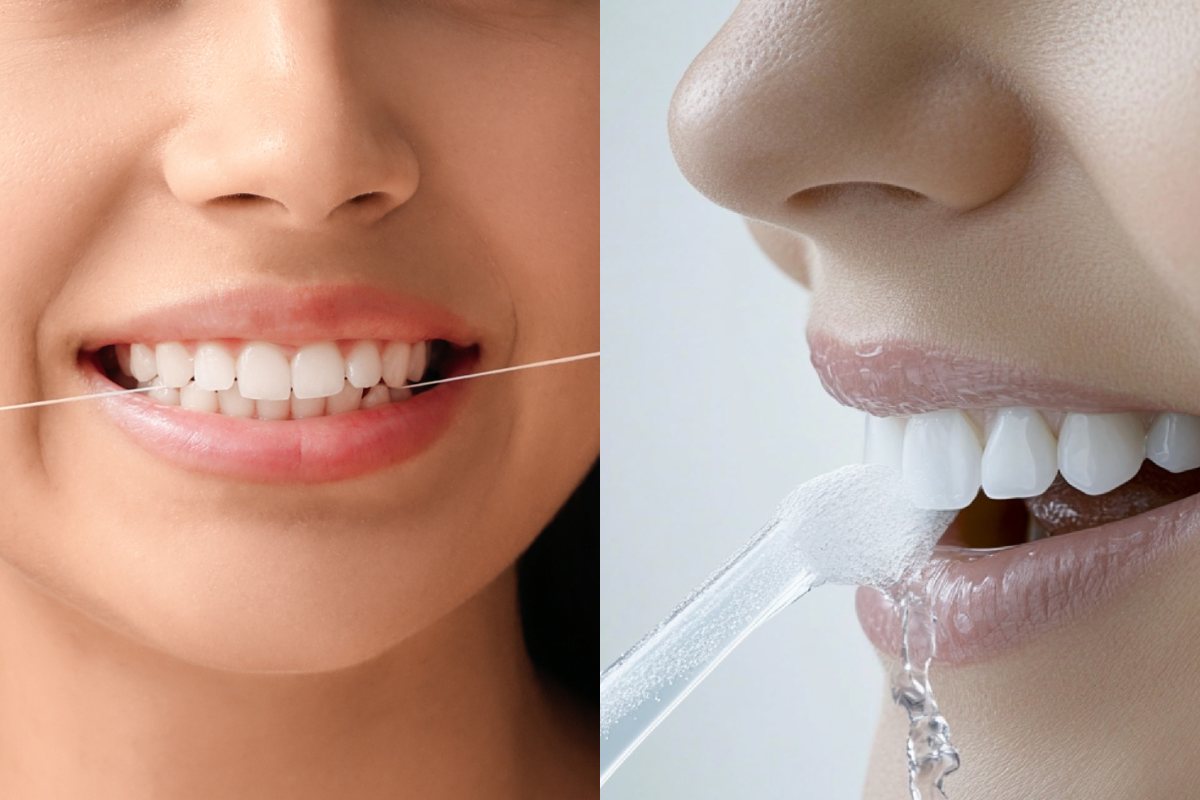
String floss remains the most extensively studied and most endorsed interdental cleaning tool in clinical dentistry. When used correctly, it physically dislodges and removes plaque from the tooth surface and just beneath the gum margin — the critical sub-gingival zone where gum disease originates.
What String Floss Does Well
- Mechanical plaque removal: The scraping, back-and-forth C-shape motion against the tooth surface physically disrupts and removes bacterial biofilm — something water alone cannot replicate
- Sub-gingival access: Floss can reach 1–2mm below the gum line when used correctly, clearing the early stages of plaque accumulation where gum disease begins
- Cost and accessibility: Available anywhere, requires no charging, no maintenance, and costs almost nothing per use
- Precision: Allows targeted cleaning of individual tooth surfaces, particularly useful for tighter contacts
Where String Floss Falls Short
- Technique-dependent: Done incorrectly — snapping, sawing, or skipping the C-shape — it misses the gum margin entirely and can cause trauma that contributes to bleeding gums
- Difficult for some patients: Those with arthritis, limited dexterity, braces, bridges, or implants find traditional flossing genuinely difficult to perform consistently
- Compliance: Studies consistently show that fewer than 30% of people floss daily despite knowing they should — the tool’s effectiveness only matters if it’s actually used
Water Flossers: A Genuine Alternative or Just Easier to Market?
Water flossers (oral irrigators) use a pressurised pulsating stream of water to flush debris and disrupt plaque between teeth and along the gum line. They’ve grown significantly in popularity — and the clinical evidence behind them has grown alongside.
What the Evidence Actually Shows
Multiple peer-reviewed studies have found that water flossers, particularly pulsating models, are effective at reducing gingival inflammation and bleeding — in some studies outperforming string floss for these specific outcomes. This is partly because the pulsation action massages gum tissue and flushes bacteria from pockets that string floss cannot physically reach.
A key 2013 clinical study found water flossing to be up to 52% more effective than string floss at reducing gingivitis and 2x more effective at reducing bleeding on probing — the clinical marker dentists use to assess gum inflammation.
Where Water Flossers Excel
- Braces and orthodontic appliances: Arguably the best tool for patients wearing invisible braces or fixed orthodontic brackets — floss threading is time-consuming and often skipped; a water flosser cleans around brackets and wires in seconds
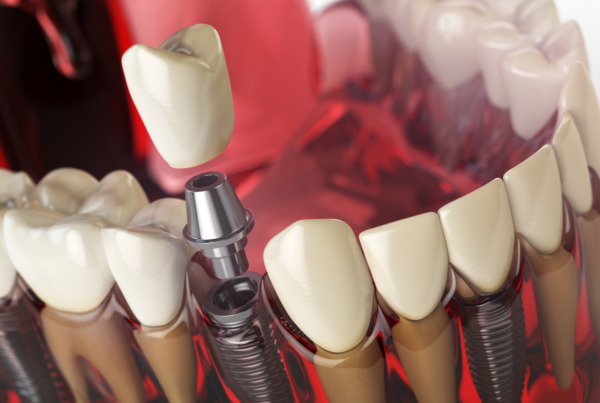
- Dental implants and bridges: String floss can be difficult to thread under a bridge pontic or around an implant crown; a water flosser cleans these areas thoroughly without technique complexity
- Gum pockets: The pressurised stream reaches deeper into periodontal pockets than string floss — beneficial for patients managing early-stage gum disease
- Compliance: Patients who ‘hate flossing’ use their water flosser consistently — and consistent use of a slightly less technically perfect tool beats perfect technique applied twice a year
- Dry mouth and sensitivity: The water action is gentler on already fragile gum tissue, useful for patients experiencing BMS or burning mouth syndrome
Where Water Flossers Fall Short
- Does not physically scrape plaque: Water flushes and disrupts biofilm but does not mechanically scrape plaque off the tooth surface the way string floss does — meaning established plaque deposits may persist
- Cost and maintenance: Quality water flossers range from ₹2,000–₹8,000+, require charging or a power source, and need reservoir cleaning
- Messier to use: Particularly during the learning curve — most new users need a few sessions near a sink before they have it under control
String Floss vs Water Flosser: Head-to-Head
| Factor | String Floss | Water Flosser |
|---|---|---|
| Plaque removal | Excellent (mechanical scraping) | Good (disruption + flushing) |
| Sub-gingival reach | 1–2mm below gum line | 3–4mm with pulsation |
| Gum inflammation | Good reduction | Excellent reduction |
| Ease of use | Requires good technique | Easier, lower skill barrier |
| Braces / implants | Difficult | Excellent |
| Cost | Minimal (₹50–200/roll) | ₹2,000–₹8,000+ |
| Daily compliance | Lower (30% of people) | Higher (easier habit) |
| Best for | Tight contacts, plaque control | Gum health, appliances, pockets |
What Dentists Actually Recommend
The honest clinical answer: use both, if you can. String floss for mechanical plaque disruption at tight contacts, and a water flosser for gum pocket flushing and overall gum health — particularly around any restorations, appliances, or areas of existing gum disease.
📋 ADP’s Clinical Recommendation by Patient Type:
|
How to Floss Correctly — The Technique Most People Get Wrong
Whether you use string or water, technique determines outcome. For string floss:
- Use 40–45cm of floss. Wind most around your middle fingers, leaving 3–4cm to work with
- Slide gently between teeth — never snap into the gum
- Curve the floss into a C-shape against each tooth and slide it up and down, going just below the gum line
- Use a fresh section of floss for each tooth — reusing the same section redeposits bacteria
For a water flosser:
- Fill the reservoir with lukewarm water. Start at the back teeth
- Aim at 90° to the tooth, directing the tip between the teeth and just below the gum margin
- Move slowly from tooth to tooth, pausing briefly at each gap
- Lean over the sink — there will be splash until the technique is learned
For a complete guide to building a daily routine that actually sticks, our oral hygiene guide covers brushing, flossing, tongue cleaning, and product choices in one place.
The Consequences of Skipping Interdental Cleaning
Patients sometimes ask what the realistic consequences are of skipping flossing long-term. Here is the honest clinical picture:
- Interproximal cavities — the kind only visible on X-ray — develop silently between teeth and typically require fillings. If caught late, the tooth may need a crown
- Gum pockets deepen as bone is lost — once beyond 4–5mm, professional gum treatment becomes necessary and some bone loss is permanent
- Teeth that develop abscesses from untreated interproximal decay may ultimately require root canal therapy or extraction
- Extracted teeth that aren’t replaced cause bone resorption — the same process detailed in our tooth resorption blog
- Persistent bad breath from interproximal bacteria affects confidence and relationships — no amount of natural mouthwash compensates for plaque left between teeth daily
The Bottom Line
| The flossing vs not flossing question has a clear answer: flossing — or its water-based equivalent — is non-negotiable for long-term dental health. The water flosser vs string floss question has a more nuanced answer: both have genuine strengths. The best tool is the one you will actually use every single day.
If you’ve been skipping interdental cleaning for months or years, a professional clean is the right starting point — it resets your baseline and gives your daily routine the best foundation. |
Want personalised advice on the right interdental cleaning routine for your teeth? Book a consultation at American Dental Practices in Mumbai or Bangalore. Our team will assess your gum health, identify any areas of concern, and recommend the exact tools and technique for your specific situation — whether you have implants, braces, or simply haven’t flossed as often as you should have.